About this blog . . .

This blog is about 80% journal, 20% review. These posts may describe very recent visits or visits taking place in the last 3 or 4 years--please feel free to update or correct any of my information in the comments or through an email message.

Sunday, March 6, 2011

Newseum, Washington D.C.


The Newseum in Washington, D.C.bills itself as "D.C.'s most interactive museum."  It's probably the newest addition to D.C.'s tourist scene, having opened in April of 2008.  The museum celebrates the 1st Amendment, beginning with the building itself, which enshrines the amendment on the front.  Exhibits throughout highlight struggles over freedom of the press,  from a memorial to reporters killed on the job to a display on free press issues in high schools. It's a huge museum, several stories high with a giant screen visible from each floor displaying the day's news.  It's easily a day long experience for a family.  We started on the first floor, with several viewing rooms for short films.

Section of Berlin Wall
Two centerpiece exhibits are the Berlin Wall and the a broadcasting tower from the 9/11 wreckage.  Behind the Berlin Wall--which is oddly beautiful, and a favorite for photo backgrounds here--a recreation of Checkpoint Charlie reminds visitors of the grim costs of this Cold War relic.

The 9/11 area includes a viewing station with images taken by Bill Biggart, a photographer who was killed in the attack, along with a brief biography and tribute.

 An exhibit on the FBI proves interesting, although it's not quite clear why this is part of a News Museum; certainly the news covered the FBI operations chronicled here, but the connection isn't obvious.  One of the main attractions here is the Unabomber's cabin; other artifacts include mementos from the FBI's fight against the Klan, and other famous operations.

Tabloid headlines
On a lighter note, other exhibits show a sense of humor.  The museum includes a collection of sensationalist tabloid headlines, and clips from news parody shows, starting with Saturday Night Live's "Weekend Update."  Even the bathrooms are fun; tiles on the walls quote from a collection of headline gaffes.

Sports fans will find something here too, as one of the viewing rooms covers great moments in sports broadcast history, and an exhibit of some of the best examples of sports photography, along with notes from the photographers, continues the theme.


Interactive exhibit on milestones in free speech.
Several expansive rooms have interactive alcoves where visitors can create their own news clips--a favorite with school-aged kids.  Huge archival sections provide samples from historical newspapers in wide pull-out drawers.  And the Newseum doesn't shy away from current controversies over the state of news itself.  One display--"Who Controls the News"--looks at the concern raised by media consolidation.  Another discusses the future of newsmedia and journalism on the internet.


View of Capitol from terrace
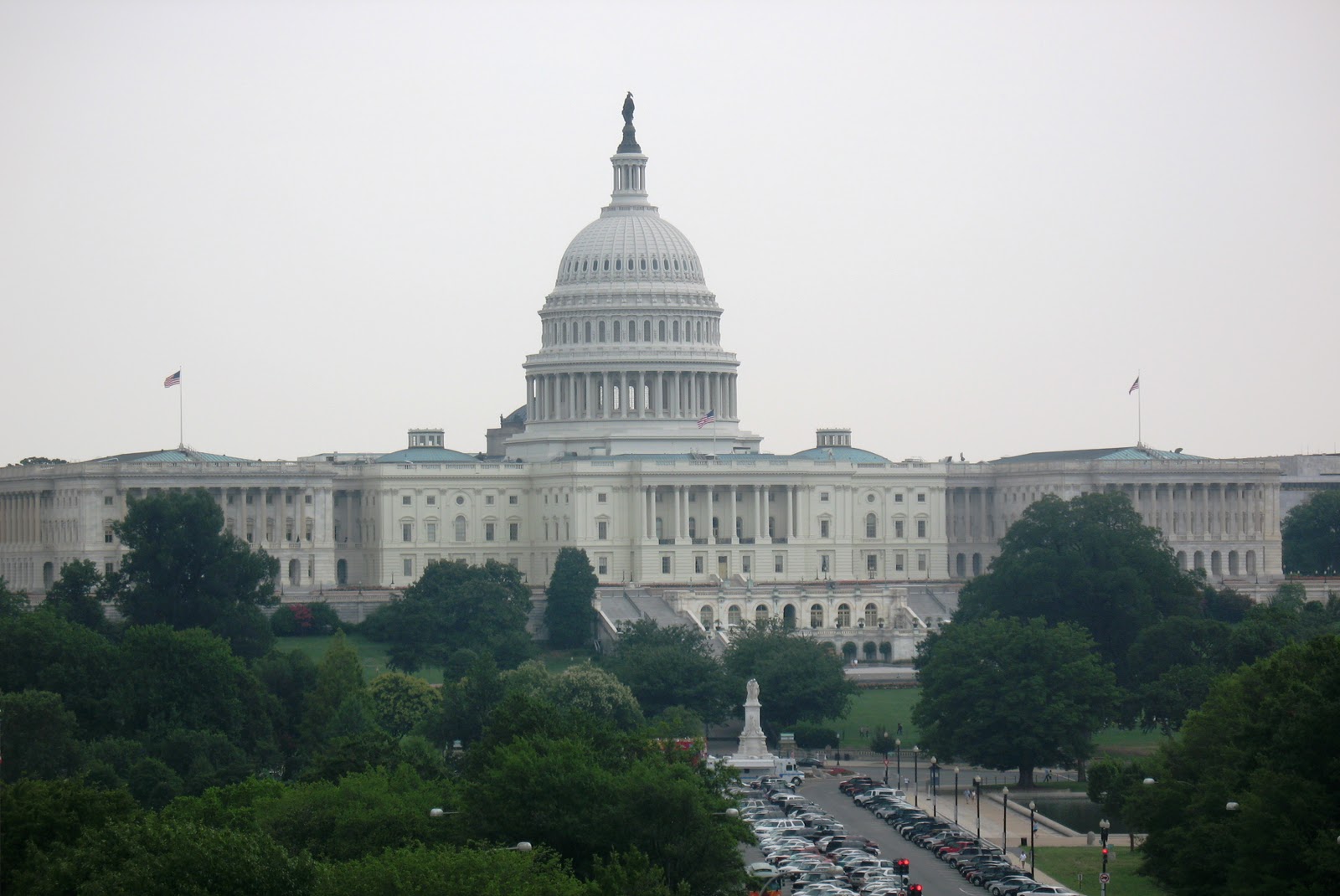
The terrace on the top floor has become a favorite for family photographs, and for good reason.  Bring a good camera and enlist the help of one of the friendly docents or a fellow tourist and you can get a much better shot of the family with the Capitol building in the background than you will anywhere near the Capitol itself.  You can definitely take care of the holiday card picture with this one.


The Pulitzer Photograph Gallery will seem like a walk through a familiar photo album.  Many of the images here bring a start of recognition--the starving child watched by a vulture,  the shooting at Kent State, the Vietnamese child fleeing after a napalm attack, the Oklahoma firefighter cradling a baby after the bombing, raising the flag at Iwo Jima.   A viewing room in the center shows interviews with some of the photographers whose work is featured.  


Finally, the Newseum has several gift shops.  Mugs seem to be a favorite here, and plenty of t-shirts.  Writing implements are also popular, along with tote bags.  You can find pretty much any quotation about freedom of the press, journalism, or reporters on a shirt, poster, or mug.  You'll definitely find interesting items beyond the usual tourist images of D.C. here.

So, plan on spending a while here--the museum offers a 2-day pass, and that might be a good idea.  Take time to reflect on the images and ideas here.  Stay for lunch at the food court --featuring Wolfgang Puck cuisine.  And get lots of great pictures--the Newseum allows photography throughout the galleries and exhibits.

From the museum website:

Hours of Operation
The Newseum is open from 9 a.m. to 5 p.m. daily and is closed on Thanksgiving, Christmas and New Year's Day.
  
General Admission
Good for admission on two consecutive days. Tickets may also be purchased at the Newseum's ticketing kiosks and admissions desk.
Military and student tickets can only be purchased on site. Valid ID is required.
Family Four Pack (two adults and two youth visitors)
$49.95 plus tax
Family Four Pack tickets are available only at the admissions desk.
Adults (19 to 64)
$21.95 plus tax
Seniors (65+), military and students with valid ID
$17.95 plus tax
Youth (7 to 18)
$12.95 plus tax
Children (6 and younger)
Free

Saturday, February 12, 2011

Grammy Museum, Los Angeles

The Grammy Museum, squeezed into LA LIVE half a block from Staples Center, makes the most of a small amount of space.  Visitors enter into a small foyer on the ground floor; the only exhibit here is Janis Joplin's car.  Signs warn that photography isn't allowed inside at all, which is a shame, because everyone here wanted to take pictures next to the car!  You can check your coat or bags here, and an attendant/elevator operator will send you directly to the 4th floor to begin the tour.

The main exhibit area begins with an interactive touch device called the Crossroads (there are several, so you shouldn't have to wait for one) which is designed to teach visitors about the links and influences between various genres of music.  If you touch "Country," for example, you will get images of different sub-genres of music that influenced, or were influenced by, Country music.

The next room carries on this idea; individual booths showcase different genres.  Visitors can sit inside the booths and watch videos of performances or retrospectives.  The outsides of the booths have the usual artifacts--instruments, costumes, posters, etc.  It is interesting to note that classical music is also included here; this is primarily a pop music museum, but it gives a nod to all genres that are included in the Grammy awards. Near the back of the room, more interactive screens focus on geography, as visitors can click on an area of the United States and find a quick audio/visual history of pop music associated with that city or state. Interactive exhibits, in fact, continue throughout the museum, so this is a great place to take older school aged kids who are interested in music.

When we visited in January of 2011, the featured traveling exhibit was the John Lennon: Songwriter exhibition.  The most striking feature of the exhibit was the listening/viewing room--I assume this feature remains and is used for all special exhibits.  It's a great place to sit and rest and take in the video display.

Visitors continue down to the lower floors for exhibits on the Grammy awards show itself.  Jennifer Lopez's famous green dress is on display here, along with a few other notable outfits.  Since the museum is only  three years old, I assume this collection will grow in future years.  A screen behind the display plays performances from Grammy broadcasts.  Tucked away in one corner we found an exhibit on the Latin Grammys, complete with instruments and headphones, and a video screen showing clips from the Latin Grammy awards.  Another area features several large glass booths with recording and mixing equipment.  Visitors can experiment with various effects and techniques for different types of music in each one.

The gift shop is a little small and cramped, out of necessity.  You'll definitely find some t-shirts you'll like, but the rest of the selection is limited.  Also, be aware that there is no cafe or food available in the museum.  It opens at 11:30, so you might want to have an early lunch (or late breakfast at The Original Pantry down the street).  There are plenty of places to eat within a block.  You can also leave and re-enter the museum; just get a wrist bracelet from the attendant at the ground floor.

All in all, a good way to spend 2-3 hours on an afternoon in downtown L.A.

Added July 2012:  According to The Huffington Post, the Grammy Museum will open the exhibit " “Whitney! Celebrating the Musical Legacy of Whitney Houston" on August 15, 2012.  The exhibit will run until February 2013.

From the museum website:

How to Purchase Museum Tickets

General admission tickets to the Museum are available through Ticketmaster and at the Museum Box Office. For program tickets, please see the Public Programs and Educational Programs pages on this website.
Buy Museum Tickets at Ticketmaster.comAdults: $12.95
Students: $11.95
(18 years and older, valid ID required)
Seniors: $11.95
(65 years and older)
Youth: $10.95
(6-17 years)
Military: $10.95
(Valid ID required)
Groups: $10.00
(10 or more persons, see Groups below)
School Groups: $8.00
Tour and program, $5.00 Tour only
Children: Free
(5 years and younger)
Members: Free

Groups

When booked in advance, groups of ten or more qualify for a discounted ticket price of $10.00. For more information, please see the Group Sales page or call 213.765.6800 (ext. 3).

Box Office

Location
The GRAMMY Museum is located at the corner of Olympic Boulevard and Figueroa Street, at the northeast corner of L.A. LIVE. The Museum entrance and Box Office are located off of Figueroa Street. All same-day sales are available through the Museum's Box Office.
Hours
Monday - Friday 11:30am - 7:30pm, Saturday - Sunday 10:00am - 7:30pm
Contact
Phone: 213.765.6803
Email: boxoffice@grammymuseum.org


Tuesday, February 1, 2011

William J. Clinton Presidential Library and Museum


Integrated into the larger complex of  The Clinton Presidential Center,  the  Clinton Library and Museum in Little Rock is a fitting tribute to the man who presided over the dot-com boom of the 90s.  Visitors enter to a room featuring the presidential limousine and attend a short orientation in the auditorium.  When we were there, the orientation featured a film on Clinton's political career (narrated by Clinton) and then a live speaker to talk a bit about the goals and ongoing work of the Clinton Foundation.  Visitors learn about the library's work in the Little Rock community, including walk-a-thons and other events.  We also learned about the Center's commitment to sustainability, and its project to rebuild the Rock Island Railroad Bridge as part of a plan to rejuvenate a formerly depressed area of Little Rock.

No important modern building seems to escape controversy over architecture, and the Clinton Library brings its share. FranaWiki covers the debate:

The main building, comprising the Clinton Library Museum and Great Hall, has been variously called a "bridge to the 21st century" (a favorite Clinton expression) as it cantilevers ninety feet out towards the Arkansas River's edge, and as the "presidential double-wide" for its color, shape, and association with a president from small-town Arkansas. The Library is essentially a long, rectangular box elevated forty feet off the ground. A two-story veranda is attached to three sides of the building.

Elevators take visitors to the exhibit floors.   One display re-creates the Oval Office during Clinton's presidency; visitors aren't allowed in this room, but in the cabinet room, guests can seat themselves where they wish and pose for pictures. Bring a camera that works in indoor light (and perhaps a portable tripod) because photography is allowed, but flashes aren't.

Floor-to-ceiling cubicles (or alcoves, according to the site) showcase various Clinton initiatives and accomplishments, particularly international humanitarian and diplomatic efforts.  A timelined display case in the center holds the usual artifacts and mementos--I found a letter from Roddy McDowell, in impeccable English, congratulating Clinton.  Another reviewer remembered a letter from Tony Danza, so I guess there is something for everyone here!  Binder-clad copies of Clinton's schedule are available along the timeline case, so visitors can see what Clinton was doing on any given day.  This room is a little overwhelming with information and multi-media displays, and it might be easy to get separated from traveling companions here. Take your time, and perhaps pick and choose the areas that interest you the most.

Another floor is packed with more artifacts, with the obligatory (but always fascinating) collection of gifts from various heads of state.  The Clinton White House Christmas decorations are featured, along with plenty of Buddy and Socks memorabilia.  The Clinton Christmas decorations for the White House are also here, as is a collection of saxophones.  This is the most interesting area for school-aged children, and it personalizes the president and his family.

We ate at Cafe 42 (reviewed in '04 by a local paper) on the lower floor for lunch.  It seemed that the chefs were trying to meld Southern cooking with more experimental cuisines.  We enjoyed our meals, but one large group of diners were extremely upset about their food; I suspect they may have been expecting more traditional fare.  So, be aware that it isn't a fried-chicken and pulled-pork diner.


The gift shop isn't located within the museum; it's a couple blocks away.  Trams ferry visitors back and forth, and it's a manageable walk if the weather isn't bad.  It's definitely worth making the trip.  The shop offers all the usual paraphernalia, plus items reflecting the Clinton Foundation's international work, and, perhaps in recognition of Vice President Gore's work, information and supplies for Green living.  There are also plenty of books, including the memoirs by the Clintons and books on his presidency as well as historical works and plenty of children's books.  Kids will love the selection of stuffed presidential pets--we picked up a miniature Bo, but you can also get Buddy or Socks.  The Clinton pets also show up on postcards--look for Buddy swimming in the White House fountain.

Follow the William J. Clinton Presidential Library on Facebook.

From the website:

Hours & Admissions
Hours 
Monday – Saturday:    9:00 a.m. – 5:00 p.m.
Sunday:   1:00 p.m. – 5:00 p.m.

Closed Thanksgiving, Christmas, and New Year’s Day
In the event of bad weather, closure or alternate hours will be posted on our automated recording at 501-374-4242.

Admission 
Adults (18-61) $7.00
Senior citizens (62+) $5.00
College Students (w/ Valid ID) $5.00
Retired Military (w/ Valid ID)$5.00
Children (6-17) $3.00
Children under 6 Free
UACS Faculty and Staff Free
School Groups w/ Reservations Free
All Active Duty Military are Free
Groups of 20 persons or more with reservations are eligible for a reduced adult-rate admission of $5 per person. If you want a guided tour you must make your reservation at least 14 days in advance. Walk-in groups are always welcome but only on a self-guided basis. To make a reservation or to ask questions please contact the Volunteer and Visitor Services Office at 501-748-0419.


Tuesday, January 11, 2011

Rock and Roll Hall of Fame, Cleveland

I can't add much here to the controversy over why the Rock & Roll Hall of Fame is in Cleveland, Ohio, or how nominees are chosen and voted in. One problem with museums covering a large, diverse topic is determining principles of inclusion, and the history of Rock and Roll faces this dilemma in spades.  That's not to say it isn't a great place to visit--a full day's experience for a visitor--but that experience is quite different from a more clearly focused museum.  If the Smithsonian is America's attic, the Rock Hall is its garage, stuffed with costumes, instruments, props, equipment, music, and--yes, cars.

U2 Tour Props


The design is already iconic--the glass pyramid is featured in the museum's logo, and pictures are all over the web.  Wikipedia has more on the structure and the architect, I.M. Pei, who designed a similar building for the Louvre.


Michael Jackson
guitar, glove
Pink Floyd guitar
The foyer of the museum resembles a modern mall, with large, white spaces and high ceilings, punctuated by pop art props from concert tours.  At the floor level, 7-foot tall pop art guitars matched to various artists provide photo opportunities.

The "green screen" portraits are shot here while visitors are waiting in line to buy tickets; the final product puts the Hall of Fame in the background, lit up in the night sky.  Visitors have the option of holding a guitar for the shot.

The entrance to the exhibit areas features the concert-type apparatus of the plastic wristband; signs at the door warn visitors not to take pictures of the exhibits, many of which are loaned under the condition that they not be photographed.  Inside, the main exhibit hall is dark, crowded, and noisy.  According to the website and program, the museum does have a plan, but it's hard to figure out once inside.  There was so much to take in that it was impossible to focus too long on any display, or linger on details.  The costumed mannequins provide the clearest focal point, as Stevie Nicks' gowns and David Bowies' progression of costumes are instantly recognizable points of interest.  Large floor-to-ceiling display cases are stuffed with artifacts.  There is accompanying text, but it is printed on silver tablets and, for me at least, it was a bit difficult to read.  In the middle, visitors can stand next to famous cars, including Elvis'.  It's fun, and in keeping with the rock spirit, but definitely leads to information overload.  Visitors who have  a few days to spend in the area might split their visits over 2-3 days, and soak up a different section of the museum each time (2-day passes are available).  The museum is a pleasant walk away from the Cleveland Riverfront area, so we took a break at midday to stroll along the riverfront before returning to the museum.

Beyond the main exhibit area, visitors can find more focused displays.  The top floor at the time of our visit featured "The Life and Music of Bruce Springsteen,"  which will be there until February of 2011.  This exhibit area changes to spotlight different acts, and did an excellent job of providing an in-depth look at early influences and evolution of its subject.  Other areas provided a glimpse into niches within the rock & roll phenomenon--a room devoted to "Austin City Limits," for example, was able to illuminate a little corner of the rock & roll world in interesting detail.  And, oddly enough, I found myself in the hallway outside one of the restrooms following biographical displays on Janis Joplin and Rick Nelson intently.


The targeted age of visitors is another difficult aspect of this museum.  The museum admits children under 8 free, but I'm not sure I would want to bring children that young here.  There were a few "PG-!3" type exhibits, but that wouldn't be my main concern.  The exhibits themselves aren't kid-friendly; they require some prior knowledge and interest and offer none of the hands-on teaching material that primary-age children would enjoy.  I would definitely recommend waiting until the kids are a little older AND have some interest in the material.  For tweens and early teens, you might want to figure out what they would already be familiar with, have them research a bit about related areas, and then focus on those sections of the museum.

Gift shop--the gift shop here, as might be expected, is extensive.  You should be able to find something for everybody on your list. Tees, hoodies, hats, shotglasses, mugs, puzzles, coasters, posters, books--pretty much everything you would expect it to have.  The website offers a selection of items, but nowhere near everything available onsite.  We didn't try any of the cafeteria options--the lines were rather long.  We took a break and had sandwiches near the Riverfront.

Addendum:  Now the Hall has a new addition--Lady Gaga's "Meat Dress. It's taken a few months to prepare it for exhibition; it will be there until February 2012.
From the museum website:
  • Adults: $22
  • Greater Cleveland residents: $18 (with ID)
  • Seniors (65+)/Military: $17 (with ID)
  • Children ages 9-12: $13
  • Children ages 8 and under: FREE with purchase of adult admission
Hours, September-May:
Open every day from 10 am - 5:30pm. Wednesdays, open until 9pmCLOSED Thanksgiving and Christmas.

Open until 9pm on Wednesdays and Saturdays from Memorial Day until Labor Day.

Monday, December 27, 2010

Arianna on Museums and Social Media Technology

Huffingtonpost has an editorial,-"Museums 2.0: What Happens When Great Art Meets New Media?"--commenting on the use of Social Networking by museums.Most of her examples are art museums, rather than cultural/historical museums, but the same points would apply.  She notes that

At their best, social media build community and enhance communication. In the case of museums, they can provide access to a much wider audience, and can extend the museum visit by allowing a user to continue the aesthetic experience after leaving the museum.

but warns

if museums forget their DNA and get their heads turned by every new tech hottie that shimmies by they will undercut the point of their existence. Too much of the wrong kind of connection can actually disconnect us from an aesthetic experience. As Sontag summed it up: "contemplation... entails self-forgetfulness on the part of the spectator."
I suspect that technology will only add to the museum experience.  Those who enjoy museums and the contemplative aspect of viewing art or artifacts in a museum setting will not stop going because they have an app for a museum.  The technology will bring more people to the table--perhaps some of those people who don't share my enthusiasm for a traditional museum visit.

Sunday, December 26, 2010

Indian Pueblo Cultural Center

 The Museum at the Indian Pueblo Cultural Center  in Albuquerque, New Mexico is part of a large complex of educational and meeting facilities.  We arrived, unfortunately, about an hour before closing time, so our visit was a little rushed--it's another museum that I would love to re-visit before long to spend more time.


At entrance to the Center
Visitors are greeted at the entrance from the parking lot to the museum by a larger-than life statue of a figure carrying a tablet and draped with a blanket bearing crosses.


Inside, the museum has an informal atmosphere.  One room near the entrance displayed dozens of dolls representing different groups of Pueblo Indians.  The figures were beautiful and detailed, set off in groups against a very blue background.  One emphasis of the museum seemed to be an appreciation of the unique character and culture of each different group, so this exhibit and the rest of the museum provide an interesting lesson in the diversity of Pueblo cultures.


The rest of the museum is a little complicated to follow, at least if you're on a time constraint, as we were.  I would definitely recommend reviewing the map/layout material and some of the background information before navigating the museum.  The artifacts and information are displayed in a series of hallways doubling back and forth, and I wasn't always sure what the connection between exhibits was.  Later in the hotel room, I found the map, and was able to piece together what I'd seen earlier.  If possible, plan ahead, visit the website, and find out what other events and tours are available.  We could see that the museum had several interactive and dramatic displays, but these were shut down by the late afternoon.


A large part of the material we saw focused on the work of contemporary artists, with some rather stunning murals, painting, and sculpture.  This seemed to be a departure from many other institutions dedicated to Native American culture that focus almost exclusively on historical artifacts.  We also saw a contemporary exhibit called "Saints of the Pueblos," depicting the patron saints of all the different Pueblos.  I found this interesting again, because it was contemporary, and because, as a native of California, I had always associated the Catholic Church with Mission Indians.  I hadn't realized their role in the culture of the Pueblos.  This exhibit will be running through 2011, according to the website.


Some of the area seemed to be under construction (in July 2010), so we had a little trouble figuring out where to go once we exited the main exhibit area and found ourselves in a courtyard.  Perhaps the late time was also a factor, as guides or docents may have left for the day by the time we made our visit.


The gift shop was extensive, and rather upscale.  A large collection of beautiful shirts and other standard souvenir collections was available, but the shop also had a fine jewelry counter.  The shop also featured an extensive display of books for all levels and educational materials, along with crafts and fine art.

So, if you are going to be in the area, plan ahead and spend some time here, probably about 2 hours for a family with school-aged children. The Harvest Cafe and Bakery was closed when we visited, but it looks like a great way to finish out a visit to the center.    Hope we can try it out next time we're in the area.

Mural on display at museum


From the Museum Website:
 Hours:
Cultural Center & Museum: M-Sun 9:00 a.m. - 5:00 p.m.
Closed major holidays

Gifts: M-Sun 9:00 a.m. - 5:30 p.m.
Closed major holidays

Pueblo Harvest Cafe:  M-Th 8:00 a.m. - 8:30 p.m.
Fri, Sat  8:00 a.m.  9:00 p.m.

Admission Prices: 
Adult (18 and over): $6.00
Senior (62 and over w/ID): $5.50
New Mexico residents (w/ID): $4.00
Students (w/ID): $3.00
Children 5-17: $3.00

Saturday, December 18, 2010

Mississippi River Museum/Mud Island, Memphis TN

The Mississippi River Museum is part of the Mud Island River Park in Memphis.  Visitors purchase tickets to the complex, then take the monorail to the Park.  The walk to the Museum covers one of the most informative displays I've come across:  the Mississippi River Walk, a scale model of the lower Mississippi River.  It's quite a walk; signs along the way highlight important historical and geographic features of the great river.  My 12-year old aspiring engineer was fascinated with following the course of the river--and trying to figure out how to stop it, and what would happen when the water was dammed then released.  For me, the park's layout made the phenomenon of the Mississippi River, and its role in history, more clear than any book or paper map ever did. 

The Museum thoroughly covers, as one would expect, the Riverboat era, highlighting the culture that grew around the river in the 19th century. Artifacts, models, and films complete the experience.  Visitors can examine engines and weaponry, then  learn about the personalities of the time.  One exhibit recreates a riverboat experience, with cabins,deck, and a night sky.  The flip side of the exhibit brings visitors to a similar recreation of the warships that briefly clashed in the Mississippi.
Mark Twain makes an appearance in a mural outside the Riverboat exhibit. 


The museum also introduces visitors to the music of the Mississippi Delta, with instruments, sheet music, and information about the music originating from the area. Biographies of musicians from the Delta provide a history of the Delta Blues.


View from the monorail on the way back from the park
An exhibit and film on the dangers associated with living and working on a major river provided a dramatic (and perhaps a little frightening to young children?) look at the flip side of the economic and trade benefits that bring populations to the river: floods, shipboard fires, and epidemics enabled by travel and climate conditions.

Visitors also learn about pre-19th century culture, as exhibits about trappers and explorers--and before them, Native American inhabitants of the era--show how the river served as a population center for centuries before the grand showboats made an entrance.

 The museum is only open from April-October; we went in July of 2010, and it was quite hot.  Be sure to bring sunscreen for the River Walk--and perhaps water pistols.  Note that there are cafeterias and restaurants at the Musem area, but they were quite crowded, so you might bring snacks to keep everybody happy.  Give the family several hours for the whole experience.  I'm not sure how much preschool or primary-age children would get out of the visit, but older school aged children who have studied some U.S. history will have a great time and have the chance to enhance their understanding of what they learned in school.

On edit:  Julia Keller recently posted a review of Wicked River: The Mississippi When It Last Ran Wild, which sounds like a great follow-up for anyone who enjoyed the River Museum.  I think I'm going to put it on my summer reading list.


From the museum website:

Open April - October 31
Will open for 2011 season on April 9, 2011


April 9 – May 27 10:00 a.m – 5:00 p.m
May 28 – September 4  10:00 a.m - 6:00 p.m
September 6 - October 31 10:00 a.m.- 5:00 p.m.

Last Admission is one (1) hour prior to closing.
Closed Mondays throughout the season.
General admission and Skybridge access is free
Roundtrip Monorail Ride Only - $4.00 per person, all ages
   (free with a Museum Package purchase!)
Museum Package includes:
*Mississippi River Museum Admission
*Grounds/Riverwalk access
*Roundtrip Monorail Ride
*Optional Guided River Walk Tour

Adults (13-59) - $10.00
Seniors (60 Plus) - $9.00
 Youths (5 – 11) - $7.00
Children (4 and under) - FREE 
 
Call for group rates, school discounts or education programs !
901-576-7241 or 800-507-6507 


Friday, November 26, 2010

Abraham Lincoln Presidential Library and Museum

The Abraham Lincoln Presidential Library and Museum seems to be tailor-made for visitors looking for an enjoyable 3 or 4 hour immersion in history.  The exhibits are organized around a large foyer--a perfect meeting place for families and groups who get separated.  This room has its own attraction--life-sized figures of the entire Lincoln family--in the center.  Helpful docents stand nearby, ready to snap pictures of visitors posing with the Lincolns.


Branching out from the entrance, exhibits include a replica of the White House, which has its own entryway and features gowns worn by Mrs. Lincoln and her friends and rivals in Civil-War era Washington D.C.  Figures of Harriet Tubman, Booker T. Washington, and even John Wilkes Booth linger outside.

Live performance venues offered a unique experience, at least for me.  None of the other museums I've visited had anything quite like the shows offered here.  "Ghosts of the Library"  was a one-man show exploring the value of museums and collections for modern audiences.  The presentation was quite well done, bringing in some drama and suspense while covering the theory behind museums providing sources of study for historians as well as emotional connections to the past for its visitors.  The second presentation used a well-known portrait of Lincoln as its starting point for exploring the many approaches to seeing and knowing who Lincoln was and what he did.

Other exhibits positioned around the entry room bring visitors through different periods of Lincoln's life--his childhood, his years as a practicing lawyer, even his time managing a store.  The museum also does a good job of bringing to life the controversy and bitter partisanship surrounding Lincoln.  Editorials, cartoons, and readings from his critics remind us that, in his own time, Lincoln was viewed quite differently than he is today.

A children's activity room, "Mrs. Lincoln's attic," invites younger visitors to try on period clothing and play with old-fashioned games and toys.  My 10 and 12 year olds were a bit older than the target audience, but did appreciate looking at the types of activities featured there.  And then, perhaps the most unintentionally amusing feature of the museum was tucked in a corner.  The ubiquitous "Souvenir Penny" machines, present in many attractions, carried more than a bit of irony here, as visitors were invited to erase the picture of Lincoln already on their penny and stamp a new one on!

All in all, a very well-packaged museum experience, humanizing the man honored in his tomb nearby.

From the museum website:

212 N. Sixth Street, Springfield, IL 62701
9:00 AM – 5:00 PM DAILY

The Museum's admission fee is:


Adult $12.00
Senior (62 and up) $9.00
Children (5 - 15) $6.00
Military (ID required) $7.00
Students (ID required) $9.00
Child (under 5) No Charge
Members No Charge

Purchase advance Museum Admission
tickets on-line
or call (217) 558-8934 for telephone ticket sales.

Saturday, November 13, 2010

Laura, A Creole Plantation, New Orleans

The Laura Plantation an hour drive outside of New Orleans provides a somewhat different plantation tour experience from those offered in cotton-growing areas of the Old South.  The plantation grew sugar, not cotton, but more importantly, it emphasizes the Creole culture of Louisiana.  The history of slavery in formerly French-controlled territory follows a slightly different path, and this attraction makes of point of covering some aspects of history that others might gloss over (I recall one plantation tour pointing out the "servant's quarters" when they drove past the slave cabins, for example).  As our guide explained, the French plantations differed in style from the American/English ones; as you can see from the photo, French design was more colorful and more utilitarian.  No ballrooms or grand libraries here--in fact, the rooms designated as working spaces were relatively simple, even sparse.  The tour of the house begins in the basement, where the simple, functional design of the house is explained.

According to the very engaged and informative tour guide, the plantation was re-named after the daughter of its last owners, who left in disgust after hearing of mistreatment of slaves.  The re-naming was apparently an attempt to entice her back.  Family stories recounted on the tour are from her book, Memories of  The Old Plantation Home, sold at the gift shop and the plantation's site.

Signs on the ground discuss the deterioration in treatment of the slaves after the Louisiana Purchase--apparently, France and the Catholic Church provided at least some protection in marital status to slaves, but this was abandoned after the territory changed hands.  The French influence remains; signs are given in French and English, and tours are offered for French speakers.

The plantation also bills itself as the home of the American tales of  B'rer Rabbit (or Compair Lapin), adapted from West-African stories retold and passed on by the plantation's slaves.  The tour features displays on the telling of the stories in the slave cabins.
  
The grounds themselves are beautiful in an almost tropical way.  We visited in Spring, so the weather was pleasant, and we enjoyed a quiet walk around the buildings. A final bonus--several cats kept on the premise, including one who seemed to see himself as a goodwill ambassador for tourists!

I would most definitely recommend Laura Plantation for anyone visiting the area.  Even if you've been on several plantation tours and believe you've done the whole "plantation thing," this one will offer a different perspective.  Make the trip from New Orleans, dress comfortably, and be prepared for a fascinating look at regional history, beautiful scenery, and a unique experience.

Update:  Visiting again in 2012, I noticed that the gift shop offered a wide selection of books on the history of the era, including versions of the Brer Rabbit story, and, of course, Memories of the Old Plantation Home, by Laura (Locoul Gore) herself.  I was surprised that they didn't carry any copies of Cane River, Lalita Tademy's  retelling of her family story of several generations of slave women working on a Louisiana River Planatation.  The gift shop does have wonderful sauces and spices (try the Red Pepper Jelly--really!), a few t-shirts, and home decorations.

From the website:

2247 Highway 18
Vacherie, LA 70090


The Plantation Store Ticket Office opens at 9:30 AM.
First tour of the day begins at 10:00 AM.
Final tour of the day begins at 4:00 PM.
Individual Admission Rate:
  • Adult: $18.00
  • Student (6-17): $5.00
  • Child (0-5): FREE
  • AAA Adult: $16.00
  • National Trust Adult: $16.00
  • Military: $16.00
  • We Save Adult: $16.00

Tuesday, November 9, 2010

Dwight D. Eisenhower Presidential Museum

The Dwight D. Eisenhower Presidential Museum is worth a side trip to Abilene, Kansas for a 2-3 hour visit.  The area wears its small-town Americana label with pride, and the museum setting is perfect for the experience.  Visitors enter the reception/gift shop area at first; while you're waiting for the introductory film, check out the "I Like Ike" memorabilia (yes, you can get a button just like the one your grandparents wore) along with WWII and 1950's nostalgic souvenirs and apparel.  Since this is Kansas, you can even get some Wizard of Oz trinkets and tees.

The film is worth watching, if only to escape from today's heavily-partisan atmosphere to a vision of a time when everyone seemed to look up to and respect the president--in fact, the film points out that both parties were interested in drafting Eisenhower to run for the presidency, and his eventual choice of the Republican party was not an immediately obvious one.  Hard to imagine that scenario today.  Even if the film shows the 50s through a rose-colored lens, it's enjoyable, not too long, and a good review of Eisenhower's life and the mid-20th century United States.

Eisenhower's childhood home
You'll walk the grounds around Eisenhower's boyhood home to get to the museum from the reception area.  The house itself is picture-perfect; you'll be able to get a brief tour of the main rooms.

The entry room of the museum features wall-sized murals of Eisenhower's career.  Inside, displays range from childhood and college mementos to wartime artifacts.  Several exhibits describe and illustrate the liberation of death camps and the aftermath, including logistical issues in caring for newly released prisoners.  Others showcase wartime strategies.  A copy of Eisenhower's alternative letter---penned in preparation for the possible failure of D-Day--provides a sobering reminder of the stakes involved in the operation.

On a lighter note, an exhibit room devoted to Mamie shows off some of her gorgeous dresses and home decor, and dolls featuring gowns of the first ladies.  A television monitor plays clips of fairly late appearances.  An interview with Barbara Walters, for example, features Mamie responding to questions about her husband's alleged infidelities with a confident dismissal.

The section on his presidency covers notable events such as the Cold War and Central High School's integration in Little Rock; there is also an exhibit discussing the heart attack he had in office--something I'd never heard about before.  An exhibit on the era itself features artifacts and iconic images from the 50s.

Addendum:  If you're on Facebook, you can follow the Eisenhower Museum.  They are currently (February 2011) renovating several of the exhibits, and have posted a photo album chronicling the renovation process.


(Note--links are to a website maintained by the Kansas Sampler Foundation:  the official museum site seems to be under construction or repair).

From the website:

Address: 200 SE 4th Street, Abilene, KS 67410 

Phone: 785.263.6700

Admission charge and hours:
$8 adults, $6 senior citizens, $1 8-15 years. All buildings at the Center are open daily from 9 a.m. until 4:45 p.m. but are closed Thanksgiving, Christmas, and New Year's Day. From Memorial Day until mid-August the Visitors Center is open from 8 a.m. until 5:45 p.m.


Sunday, October 17, 2010

Oklahoma History Center, Oklahoma City

The Oklahoma History Center, opened in 2005, is a beautiful, still sparkling-new museum. State museums generally have a lot of ground to cover, and have to face the challenges of what to include and how to organize and display the wide range of available material.  Exhibits here range from the very popular "Another Hot Oklahoma Night: A Rock & Roll Exhibit" to exhibits on Oklahoma cartoonists, Native American tribes, kitchens, and aeronautics.


It's really a full-day experience, or perhaps a 2 half-day project.  For tourists trying to see everything in one several-hour visit, the range can be overwhelming.  I could have spent an entire visit in the arts and entertainment section, which started with the guitar display at the entrance and led to a full room on the rock/country exhibit "Another Hot Oklahoma Night," with a huge range of Oklahoma-based acts, including instruments, costumes, posters, and a section set up to look like a 70's college dorm room.  Life sized posters outside featured Woody Guthrie, Charlie Christian, and Bob Wills, and one of the first acts featured inside is Wanda Jackson,  reflecting the local Oklahoma influence on popular music. Newer music makes an appearance as well--The Flaming Lips are one of the modern bands with a presence here.


Broader cultural exhibits include an extensive walk-through the century section, with fashions and fads from the 20th century (I had forgotten all about the new-fangled Trimline phones of the 70s!) and samples of kitchen decor and appliances in bygone years.


A replica of the Winnie May highlights the aeronautics section, and provides a stunning foreground for a shot of the Oklahoma State Capitol.  There is also a cute little cafe here decorated with old-fashioned luggage--another memory trigger.  See if you can find the classic Samsonite design your parents took on their honeymoon!

Extensive historical exhibits on Oklahoma politics, African-Americans in Oklahoma, and Native American tribes could take several hours to absorb on their own.  And, like many other state museums, the History Center has exhibits on prominent native citizens in the military.  If you're traveling, then, you might want to consider either choosing an area and focusing your time (perhaps on one of the subjects you can't find in other museums) or allotting  a couple of 2-3 hour visits.  Give yourself time to look around outside as well; the exhibits continue with a scaled Red River path outside,and models of working oil derricks, reflecting the influence of the oil industry in Oklahoma's history.


The gift shop is definitely worth a look as well--a large selection of original, location-specific t-shirts, lots of children's gifts.


From the website:

Oklahoma History Center                                      Museum Hours             
800 Nazih Zuhdi Drive                                              
Monday - Saturday 10:00 a.m. to 5:00 p.m.
Oklahoma City, OK 73105                                        
Closed: Sundays, New Year’s Day, Thanksgiving Day, Christmas Day
405-522-0765


Admission

Adults: $7
Seniors ( 62+): $5
Students: $4
Children (5 & Under): Free
Family: $18.00
Veterans and Active Duty Military: Free            OHS Members: Free
Group Rate (10+): $5 per person
Discounts for OMA, AAM, Time Travelers network, Smithsonian Institute and Affiliate Members


Sunday, October 3, 2010

Old State House Museum, Little Rock

The Old State House Museum occupies the former State House for Arkansas.  The use of an historical building (as opposed to the new, modern buildings created for other state history museums, such as North Carolina's and Oklahoma's) offers some advantages.  To begin with, the site is beautiful.  Visitors can admire the historical building itself, rather than relying on pictures or models.  There is also a certain privilege involved in sitting in and occupying the rooms where history happened.   Of course, there are some trade-offs.  Rooms have to be re-imagined from their original purpose to accommodate displays and lines of visitor traffic.  Rather than the stunning, open great room that newer museums have as an entrance, the Arkansas History Museum has a hallway followed by the admission desk.

Once inside, the museum has the more intimate feeling that one would expect from a well-used historical building.  Exhibits spread across several rooms explore the history of the State House itself, and the dedicated women who protected and preserved it.  At one point, the building housed a medical school, and artifacts and photographs highlight the use of the building and the state of medicine during its use in that capacity. Another room features memorabilia from Bill Clinton's years as governor and from his campaign for the presidency. Visitors can also view--and sit in--the room used by state legislatures in earlier years.

The museum also explores the state's ambiguous reputation.  A permanent exhibit titled "Arkansas/Arkinsaw: A State and its Reputation" takes an interesting look, as their website notes, at  "the early development of a dual image, with Arkansawyers being portrayed as coarse, illiterate, and violent backwoodsmen on one hand, while also lifted up as noble frontiersmen – independent, honest, and humble."  Cartoons, quotations, and artifacts--such as Grandpa Jones' banjo--explore, explain, and question the image of the Ozark Hillbilly.  I found this the most interesting part of the museum, since it looked at this material with a sense of humor even as it considered the perhaps more serious implications of the hillbilly stereotype.

Information from museum website:

Admission is FREE
Open 9:00 a.m. to 5:00 p.m. Monday-Saturday; 1:00 to 5:00 p.m. on Sunday;
Closed Thanksgiving, Christmas Eve, Christmas, & New Years Day

Location & Directions
The museum is located at 300 W. Markham, situated between the DoubleTree and Peabody Hotels.


Thursday, September 16, 2010

Levine Museum of the New South, Charlotte

The "New South" in the museum's title reflects the economic and social gains of the South in the 20th century.  As Edward Rothstein points out in his review of the Levine Museum in the New York Times,
It is unlikely that anything resembling the impressive Levine Museum of the New South would exist anywhere else. A museum of the New North or the New East would be merely peculiar, but here the term “New South” has a venerable heritage, recalling unrealized hopes and great expectations. There is also much at stake in trying to understand just what the term really means.
 This museum followed a trend throughout the South of looking into and even confronting the past of the "Old South."  The museum is divided into two main levels.  On the lower level, visitors experience a history museum with the theme of progress.  Agricultural exhibits on farm equipment and life as a tenant farmer show how far behind the Old South was in industry and economic power in the post Civil War-early 20th century era.  An exhibit on racist groups provides a fairly honest look at the Councils and Klans--costumes and other artifacts are displayed.  (In one interesting approach to displaying disturbing material, the museum covered a photograph of a lynching scene and offered a warning to visitors about the material.)

Other civil-rights era exhibits include the infamous Greensboro Lunch counter and a replica of a school bus used for integration.  Television monitors in this area replay key news broadcasts from the era, awakening memories for those who lived through the events and making it more immediate for younger viewers.

Much of the museum also focuses on agriculture, industry, and economy in the South.  A brief film near the entrance narrates the progression from farming to industries (primarily textiles) to banking (although the film may need updating in light of the recent financial crisis).  My own family found the replica of milltown housing---an integral element in the textile industry's economy-- fascinating.  My husband and son played a game of bottlecap checkers there, and my daughter explored the kitchen cabinets and the wood stove.  My own interest reflected something more personal; my mother spent her earliest years in a house and a kitchen much like this one, in a small town in North Carolina in the 1930s.

  At the top level, the museum transforms from a historical/cultural experience to a tolerance museum.  These are interactive exhibits, offering visitors the chance to try on different clothes, respond to situations, and question their assumptions about other people.  One exhibit, for example, displayed pictures of individuals who might be easily stereotyped, then invited viewers to open a panel to reveal surprising or unexpected information about each person.

Rothstein mentioned that, until recent budget cuts, a Levine field trip had been a required part of  North Carolina's 8th grade curriculum.  I'll have to say that I hope those funds are restored soon; the museum offers a thoughtful, well-organized educational experience for all visitors, but it would seem particularly appropriate for upper-elementary and middle school students who are ready for this material and who need to move beyond a textbook to appreciate it fully.


Information from website:

Admission
Adults $6.00
Seniors (62+) and Students $5.00
Children (6-18) $5.00
Family $17.00
Under 6 free
Groups* $4.00
*10 or more, with advance reservation


Hours
Monday - Saturday:  10:00 a.m. - 5:00 p.m.
Sunday:  12:00 p.m. - 5:00 p.m.
Closed Easter Sunday, Memorial Day, Fourth of July, Labor Day, Thanksgiving Day, Christmas Eve, Christmas Day, and New Year's Day.

Parking
On weekdays, Levine Museum provides visitors 2 hours of validation for parking in Seventh Street Station parking deck, which is located next to the museum. After 2 hours, regular parking fees apply.
On weekends and for evening events, the museum provides parking validation, with no hourly limit.
Visitors should present parking ticket for validation at the Guest Services desk upon arrival.

Saturday, September 4, 2010

Scott Joplin House State Historic Park

The Scott Joplin House  seems to be a museum in progress.  Joplin lived here for only a few years, early in his first marriage.  The museum is working on furnishing and decorating with period household goods.  The exhibit on the main floor, in fact, explains that few of Joplin's belongings are available, and describes how they are trying to locate and refurbish items that accurately reflect the era--according to the website, 1902.  Copies of Joplin's sheet music and other memorabilia decorate the walls.

The museum experience begins with a film on Joplin's life, which we found informative--if a bit too long.  A guide escorts visitors upstairs, where they can see a re-creation of the bedrooms.  One room holds a period piano.  Back downstairs, the guide takes requests for the player piano.

I would like to visit this museum again in 5 or 6 years, just because I think there is a potential there for much more, and it hasn't quite been achieved yet.  The introductory video, for example, could be edited to cut about 10 minutes.  The guides, while friendly and informative, could be more helpful with a little more background knowledge about the music.  Also, according to one of the brochures available, the museum is associated with The Rosebud Cafe, a performance venue for Joplin's works, including his opera Treemonisha.  I'm hoping that soon the connection will be made more explicit, and visitors will be offered more assistance in combining the museum with the performance.


Update, 30 March 11--The museum has updated its website, and has a new video with a tour preview and information about the Rosebud Cafe, which is available to rent for performances or events.


Info from website:

2658A Delmar
St. Louis, MO 63103
314-340-5790

Hours:

Summer Hours (On-Season)
  • March through October - 10 a.m. to 4 p.m., Monday through Saturday (closed Sunday)
Winter Hours (Off-Season)
  • November through January - Closed
  • February - 10 a.m. to 4 p.m., Tuesday through Saturday (closed Sunday and Monday)
Tours are offered every hour.

Tour Prices:

Adults: $4.00
Children 6-12: $2.50
Under 6: Free

Group Rates (15 or more; reserve 1 week in advance @ 314-340-5790):  
Adults:  $3.00
Children 6-12: $1.50